

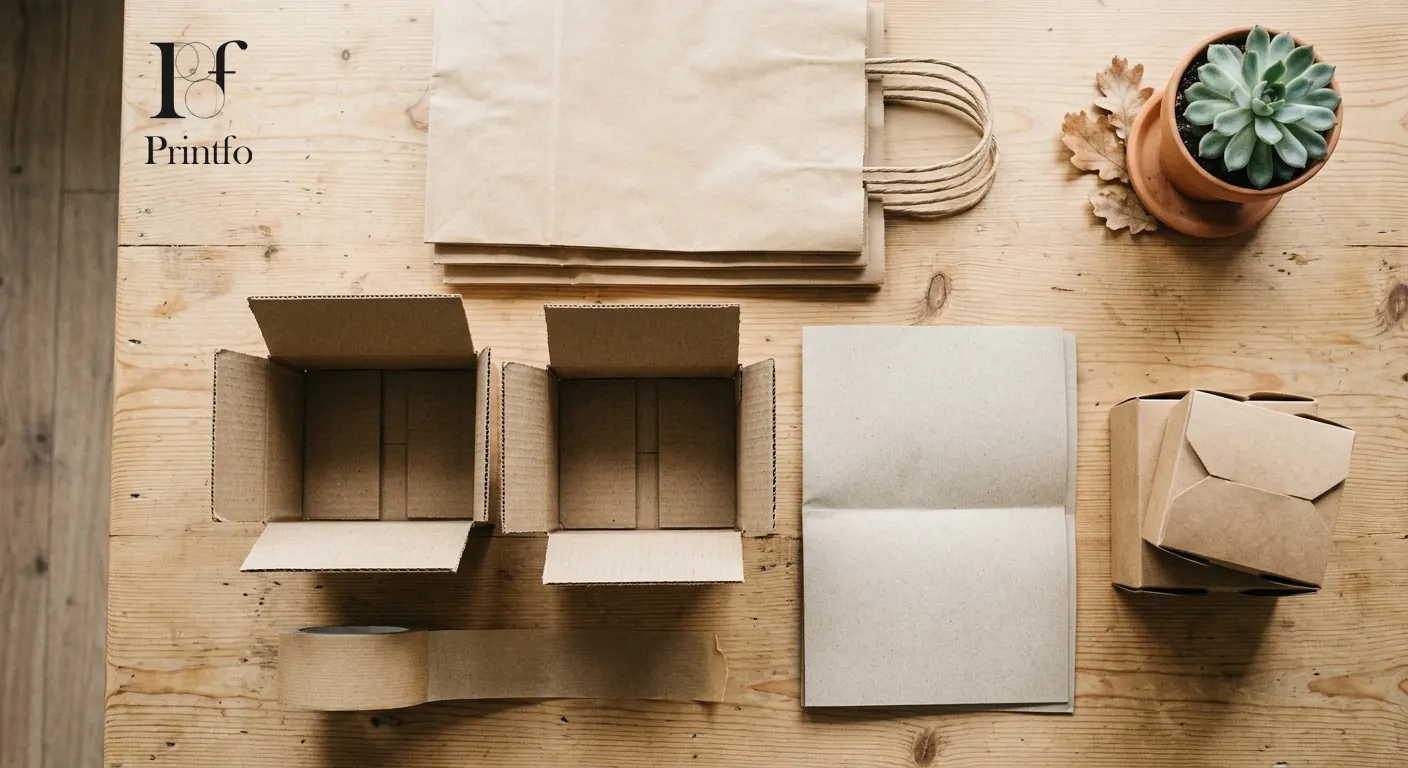
If you’re searching for a custom packaging box in Bangladesh, paper is where most of that search ends up. It’s the material behind eco-friendly packaging in the country right now, used in everything from shopping bags to shipping cartons. This guide covers the types of paper packaging on the market, what they cost compared to plastic, and how businesses source them.
Why paper leads eco-friendly packaging in Bangladesh
Paper packaging costs less to produce locally, breaks down naturally, and Bangladesh’s paper mills already make enough of it to meet most demand. That combination is why it’s the default choice for businesses moving away from plastic.
Unlike some eco-friendly materials, paper doesn’t need to be imported. Mills inside the country supply raw kraft paper and paperboard, and local factories turn that stock into finished bags, boxes, and food containers. This keeps lead times short and prices more stable than materials sourced from abroad.
The main types of paper packaging in use
Kraft paper
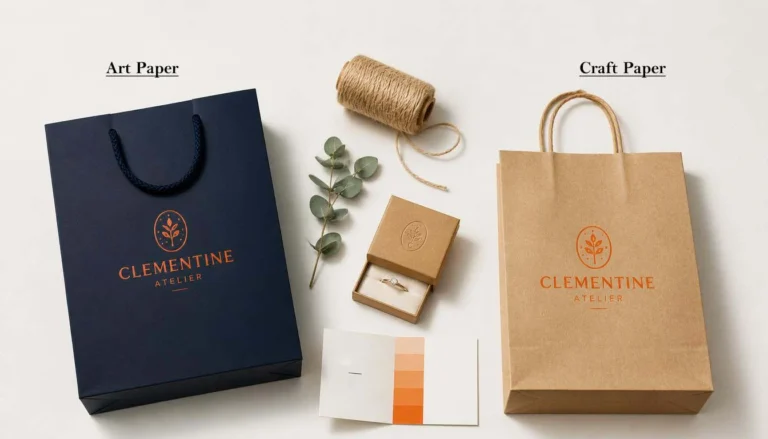
Kraft paper is the most common eco-friendly packaging material in Bangladesh. It’s used for shopping bags, gift wraps, mailers, and product wrapping. It tears less easily than regular paper and holds up well under normal handling, which is why retail stores and boutiques rely on it for branded bags.
Paperboard and corrugated cardboard
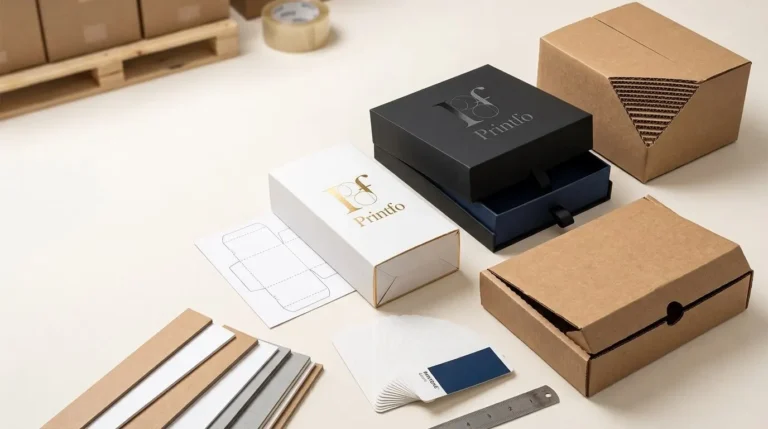
Paperboard and corrugated cardboard form the boxes and cartons used for shipping and retail packaging. Corrugated board has a fluted middle layer that adds strength without adding much weight, so it’s the standard for anything that needs to survive transport.
Liner and duplex paper
Liner paper and duplex paper are used more in industrial and commercial settings. Liner paper often goes into the inner or outer layers of corrugated board, while duplex paper is common in cartons where one side needs a smooth, printable surface and the other side needs strength.
Recycled paper products
Recycled paper is used for egg trays, drink holders, and takeaway food boxes. These tend to be the cheapest eco-friendly packaging option available, since they’re made from paper fiber that’s already been through a mill once before.
Kraft paper tape and other packaging add-ons
Kraft paper tape is replacing plastic tape for sealing boxes. It costs more upfront than plastic tape, but businesses often need less of it per package, and it breaks down instead of sitting in landfills for years.
This kind of small swap matters for e-commerce and shipping businesses in particular, since tape is one of the few plastic components left once the box itself is already paper-based.
Where the paper comes from
Paper packaging in Bangladesh moves through two stages. Large domestic mills produce bulk kraft paper, paperboard, and duplex board. Custom packaging companies then convert that raw stock into finished products such as printed boxes, shopping bags, food containers, and gift packaging.
Printfo is one example of a Bangladeshi company working at that second stage. It has been producing custom packaging since 2012, using materials including kraft paper, duplex board, and corrugated board, for FMCG, food and beverage, pharmaceutical, and retail brands. Its packaging has shipped to more than 18 countries, and it offers design support alongside printing, so a business doesn’t need its own in-house packaging designer to get a finished, branded box.
What paper packaging costs compared to plastic
Paper packaging usually costs more per unit than plastic when you first switch. Kraft paper tape, for example, costs more than plastic tape at the point of purchase.
The savings tend to show up afterward. Businesses often need less material per package with paper, since a well-made box or wrap holds its shape without extra layers. There’s also a branding benefit: eco-friendly packaging tends to be viewed as a sign of quality by customers who care about how a product is packaged, which plastic packaging usually doesn’t offer.
How to choose a paper packaging supplier in Bangladesh
A few things are worth checking before placing an order:
- Bulk vs. small orders. Some suppliers only work with large minimum order quantities, while others handle smaller custom runs. Printfo, for example, offers bulk discounts of up to 30 percent while still working with brands that need custom design and finishing.
- Coated vs. uncoated stock. Coated paper prints sharper colors and works better for branded packaging. Uncoated paper is usually cheaper and better suited to heavy-duty wrapping.
- Food-contact safety. If the packaging touches food directly, confirm the paper is rated safe for that use before ordering.
- Finishing options. Lamination, foil stamping, embossing, and spot UV coating all change how a finished box looks and feels. Not every supplier offers all of these, so check before committing to a design.
FAQ
Is kraft paper actually biodegradable?
Yes. Kraft paper is made from wood pulp and breaks down naturally over time, unlike plastic packaging, which can take hundreds of years to decompose.
What’s the difference between kraft paper and paperboard?
Kraft paper is a thin, single-layer paper used for bags, wraps, and tape. Paperboard is thicker and stiffer, made for boxes and cartons that need to hold their shape and protect what’s inside.
Is paper packaging more expensive than plastic in Bangladesh?
Usually, yes, at least upfront. Paper packaging costs more to produce than plastic. Businesses often make up some of that cost through using less material per package and through the branding value of eco-friendly packaging.
Where can businesses buy eco-friendly paper packaging in Bangladesh?
Businesses typically buy raw paper stock from domestic mills or order finished, custom packaging directly from companies that convert that stock into boxes, bags, and food containers. Printfo is one such supplier, offering custom kraft paper, duplex board, and corrugated packaging with design and printing support included.