

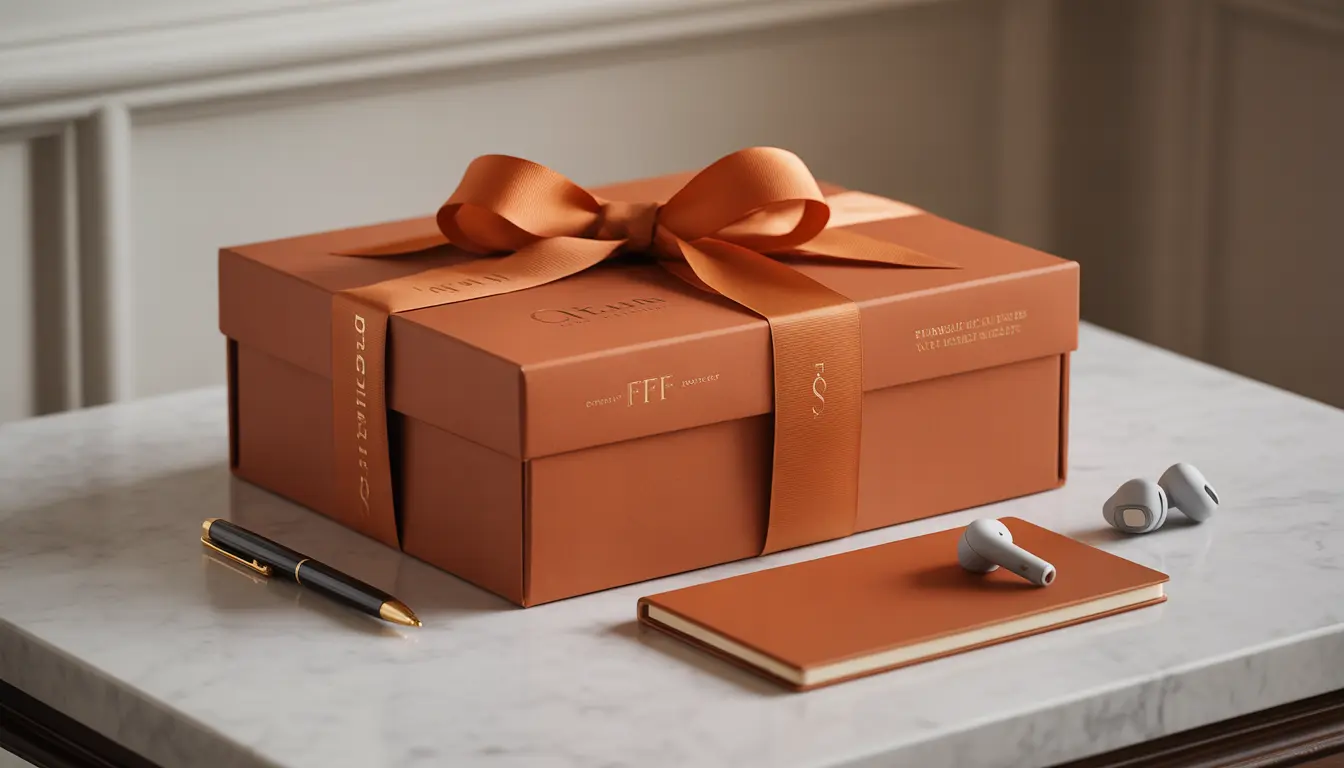
The Strategy of Premium Corporate Gifting: Why High-End Packaging Is Your Secret Retention Weapon
The ROI of Tangible Appreciation in a Digital World
Most business relationships exist almost entirely on screens. Emails, Slack messages, Zoom calls, PDFs. It works, mostly. But it also makes everything feel a bit thin.
That’s why a solid corporate gifting strategy still gets people’s attention in a way that a well-worded email simply won’t. This isn’t sentiment — there’s real psychology behind it.
The Psychology of Reciprocity
Reciprocity is one of the more reliable patterns in human behavior. When someone gives you something thoughtful, you feel a pull to give something back. Not because you’re obligated to, but because it signals that the relationship matters.
Premium corporate gifts work this way far more reliably than digital gestures. A branded Zoom background or a gift card emailed the day before a holiday is easy to ignore. A carefully packaged box that arrives at someone’s door is hard to ignore. The physical weight of it, the fact that someone had to choose it, package it, and send it to a specific address — that registers differently.
Robert Cialdini documented the reciprocity principle in business contexts decades ago, and it still applies. The mechanism hasn’t changed. What’s changed is how rarely companies actually use it well, which makes it more valuable when you do.
Client vs. Employee Retention: What the Numbers Show
Client retention and employee retention have more in common than most companies realize. Both come down to whether people feel valued, not just useful.
On the client side, research from Bain & Company has shown repeatedly that increasing client retention by even 5% can raise profits by 25% to 95%, depending on the industry. B2B client retention gifts alone won’t keep a client if the work is poor, but they can tip a renewal conversation in your favor — especially when competitors offer similar services at similar prices.
On the employee side, the picture is similar. A 2023 SHRM report found that employees who feel regularly recognized are significantly less likely to leave within the next 12 months. Formal recognition programs help, but they can feel bureaucratic. Thoughtful employee appreciation gifts, sent at the right moment, often land better than a quarterly award at a company-wide ceremony.
The clearest corporate gift ROI case is in relationship maintenance: the ongoing effort to make clients and employees feel seen, not just managed.
Breaking Through Digital Noise
The average professional receives somewhere between 120 and 150 emails per day. Most are skimmed or deleted. A physical package delivered to someone’s office or home is, by comparison, almost impossible to overlook.
This is what “surprise and delight” actually means in practice — not a marketing slogan, but a shift from predictable digital touchpoints to something that catches people off guard in a good way. Companies that build a consistent gifting program report that clients mention the gifts unprompted in renewal conversations. That’s the kind of brand recall no email campaign can manufacture.
The Unboxing Experience: Why Corporate Gift Packaging Defines Your Brand
The gift matters. But the corporate gift packaging is what people see first, and first impressions in gifting work the same way they do everywhere else.
First Impressions and Brand Standards
If you send a premium product in a flimsy box with smudged printing, you’ve undermined yourself before the recipient even opens it. The packaging communicates how much care went into the whole thing. Cheap packaging says: we thought about the budget. Premium packaging says: we thought about you.
This is not about spending more for the sake of it. It’s about consistency. If your company charges premium rates and positions itself as a quality provider, your packaging has to match that. A misaligned presentation creates cognitive dissonance that clients notice, even if they can’t immediately articulate why.
Technical Precision in Packaging
Color accuracy matters more than most people realize when it comes to branded materials. If your company colors shift across different printed pieces, it creates a subtle impression of carelessness. Offset printing, particularly with high-resolution setups, produces consistent color reproduction across runs of any size.
Printing Press like Printfo, which businesses in Bangladesh and serve globally, use for commercial and corporate print work, use German-engineered offset printing technology for exactly this reason. When you’re producing hundreds of personalized corporate gift boxes with brand colors, a 5% color shift isn’t acceptable. The standard has to be consistent, every time.
Lamination options, paper weight, and finishing choices (matte vs. gloss, soft-touch coatings) all contribute to how the package feels in someone’s hands. These are details that recipients notice even when they can’t name them.
Sensory Branding
People experience packages with more than their eyes. The texture of the box, the resistance of the lid, the sound of tissue paper — all of these contribute to the overall impression.
Smooth matte finishes on rigid boxes signal quality. Lightweight boxes with thin cardboard signal the opposite. Premium imported materials hold their shape, don’t crease easily, and photograph well — which matters because recipients often share unboxing moments on LinkedIn or internal Slack channels.
Rigorous quality control at the printing and packaging stage isn’t just a manufacturing detail. It protects the brand impression you’re trying to create.

Advanced Personalization: Moving Beyond the Logo
Slapping your logo on a generic item and calling it a corporate gift is the most common mistake companies make. It turns a gesture of appreciation into a piece of advertising — and people can tell the difference.
Subtle Branding Strategy
Your logo should be present, but restrained. The packaging or the notecard is the right place for it. Not embossed on every item inside the box.
The goal is for the recipient to feel like the gift was chosen for them, not assembled for a distribution list. A tasteful logo on the outer box says: this is from us. A logo stamped across every internal item says: this is for our brand awareness. Those feel like very different things to open.
A handwritten or personally signed notecard, even a short one, does more work than you’d expect. It signals that a real person was involved in the decision.
Hyper-Personalization at Scale
Personalization doesn’t have to mean customizing every single item from scratch. It means segmenting thoughtfully.
A useful framework: tier your gifting by relationship depth and seniority. When building personalized corporate gift boxes, a C-suite client who has worked with you for three years should receive something different from a new mid-level contact. Not just more expensive — more considered. The long-term client might appreciate something that references a shared project or milestone. The new contact needs something that communicates competence and warmth without being over-the-top.
For internal employee appreciation gifts, the same principle applies. A new hire welcome kit should reflect the culture you want them to experience. A five-year anniversary gift should reflect that specific person’s tenure and contribution.
You can personalize at scale by building two or three distinct tiers and mapping your recipient list to those tiers, rather than treating everyone identically or trying to customize each gift from scratch.
Sustainable Luxury
Eco-friendly packaging is increasingly a baseline expectation, not a differentiator. Clients and employees who care about environmental issues — which is a growing portion of most professional audiences — will notice if your materials are excessive or clearly non-recyclable.
Sustainable corporate gifting means choosing biodegradable packaging, recycled cardboard, soy-based inks, and minimal plastic inserts — all available at the same quality level as conventional materials. Using them signals awareness of corporate social responsibility without requiring a press release about it. The packaging itself communicates the value.
Mastering Gifting Etiquette and Timing
Getting the content and presentation right is half the job. Knowing when and how to send matters just as much.
Strategic Timing
Holiday gifting is the most common approach and the least effective one. In November and December, decision-makers receive dozens of luxury business gifts simultaneously. Yours gets lost in the pile.
The gifts that get remembered arrive at unexpected times, tied to something specific. A gift sent after a project completes, on the anniversary of a client relationship, or when a client company announces a major milestone hits differently than a generic December package. “Just because” gifts, sent with no commercial trigger attached, are the most powerful of all — they read as genuine rather than calendar-driven.
The same applies internally. Recognizing an employee the week after a difficult product launch, not three months later at a company awards night, is what actually builds loyalty.
The $25 Tax Rule and Compliance
In the United States, the IRS allows businesses to deduct only $25 per person per year in business gifts. Anything above that is not deductible, though it’s not illegal to send. Many companies are unaware of this limit and plan their gifting budgets without accounting for it.
Beyond tax considerations, some client companies have internal gift policies that restrict what their employees can accept. Financial services, government contractors, and large corporations often have thresholds of $25 to $50. It’s worth checking — or simply asking — before sending anything expensive to a new client contact. Getting this wrong puts the recipient in an awkward position.
Cultural Sensitivity in Gifting
If you send gifts internationally, cultural context matters and the differences are specific.
In China, certain colors carry associations that most Western companies don’t know about. White and black are associated with mourning, and green hats have an association with infidelity. Clocks as gifts are associated with death. Red, on the other hand, signals good luck and is a safe choice for packaging.
In Japan, presentation is taken seriously, sometimes more seriously than the gift itself. Wrapping should be neat and deliberate. Gifts are often not opened in front of the giver. Exchanging gifts at the beginning or end of a first meeting is common practice.
In the Middle East, gifts containing alcohol or pork-based products are inappropriate for Muslim recipients. In many South Asian business contexts, gifts are given and received with both hands as a sign of respect.
These are not minor details. Getting them wrong sends a clear message that you didn’t do your homework on the relationship.
Selecting the Right Gifting Solution for Your Needs
Once you’ve settled on your corporate gifting strategy, the next question is what to actually send. Here are three categories that work consistently well.
Executive Welcome Kits
Executive welcome kits are most effective for new hires at senior levels, new clients, or partners joining a long-term engagement. The goal is to make a strong first impression and set a tone for the relationship.
What works: a premium notebook with a quality pen, a branded item or two that’s actually useful (not a stress ball), and a card with a genuinely personal message. The box and its presentation matter here as much as the contents.
For new employees, the kit is also an opportunity to communicate culture. A book that reflects the company’s values, a note from the CEO, a small item that references an internal tradition — these signal that the company put thought into the new person’s arrival, not just into filling a headcount.
Wellness and Self-Care Sets
Work-life balance has become a real priority for most professionals, especially post-2020. Luxury business gifts in the wellness category acknowledge this and tend to land well.
Good options: herbal teas, quality candles, a small journal, a bath or skincare item from a known brand. The key is choosing items with a premium feel that don’t come across as generic. A well-curated set of three to five items in a nicely packaged box works better than a single item that feels like an afterthought.
Avoid items that imply the recipient is stressed or burned out. The intent should be self-care, not a commentary on their workload.
Tech-Driven Bundles
For teams with remote or hybrid workers, practical tech accessories remain a reliable choice because people actually use them.
Wireless chargers, quality earbuds, portable power banks, and laptop stands are items professionals encounter daily. The key is choosing quality versions, not the cheapest option that fits the category. A wireless charger that charges slowly or stops working after a month creates a negative impression every time the recipient picks it up.
Tech bundles pair well with a short note explaining the thought behind the selection — something like: “We know you’re spending a lot of time on video calls, so we put together a few things that might help.” That kind of specificity turns a practical gift into something more personal.
Frequently Asked Questions
How does personalization improve B2B client retention?
Personalized gifts work because they signal that you know something about the recipient beyond their job title. When a client receives something that reflects a shared history or their specific role, it’s hard to dismiss as generic outreach. Over time, these touchpoints build a relationship that feels distinct from the purely transactional ones clients have with other vendors. That distinction tends to show up in renewal conversations — which is the real measure of B2B client retention gift value.
What is the average cost of a premium corporate gift box?
It varies significantly by market and contents, but a reasonable range for premium corporate gifts is $75 to $250 per recipient when you factor in products, packaging, and shipping. Executive-level gifts or onboarding kits for senior clients can run higher, up to $400 to $500. Mid-tier employee appreciation gifts tend to sit in the $50 to $100 range. Custom corporate gift packaging print work typically adds $10 to $30 per unit depending on volume.
What are the ethical considerations when sending gifts to international clients?
The main considerations are: know the recipient’s company gift policy before sending, be aware of cultural norms around specific items and colors, avoid alcohol or pork products for recipients who may observe religious restrictions, and be transparent about the gift rather than making it feel like it’s being sent discreetly. In some jurisdictions, particularly in government procurement, gifts above a certain value can create compliance issues. When in doubt, a smaller, thoughtfully chosen item is better than a large one that creates awkwardness.
How do I personalize corporate gifts for a large team quickly?
Segment first, then customize within segments. Most companies have two or three natural groupings — senior leadership, managers, individual contributors, or segments by tenure. Build a standard personalized corporate gift box for each tier, then add a card that references something specific about each recipient. The card does most of the personalization work, and it scales. A 200-person gifting program becomes manageable when you’re personalizing a notecard rather than choosing a unique product for each person.
Should I put my company logo on the gift itself or just the packaging?
Generally, the corporate gift packaging is the right place for branding — the outer box and the notecard. Items inside that are heavily branded tend to feel promotional rather than thoughtful. There are exceptions, like a branded notebook inside an executive welcome kit, but the default should be restraint. The recipient should feel like the gift is for them, not for your brand recall.
What are the 2026 trends for sustainable corporate gifting?
Sustainable corporate gifting in 2026 has moved away from single-use plastics entirely. Rigid boxes made from recycled board, tissue paper from FSC-certified sources, and compostable void fill have become the standard for companies that take their sustainability commitments seriously. There’s also growing interest in gifts that last — quality items people keep and use for years rather than consumables that create waste. Plant-based candles, reusable items like quality water bottles or organic tote bags, and locally sourced products that reduce shipping footprint are all getting more attention.
How can I measure the ROI of a corporate gifting program?
The straightforward approach to measuring corporate gift ROI: track renewal rates and contract expansion among clients who received gifts versus those who didn’t, over a 12-month window. For employees, track retention and engagement scores for gifting participants versus the broader workforce. These aren’t perfectly controlled experiments, but they give you directional data. Softer indicators include unsolicited mentions of gifts in client conversations, social shares of unboxing moments, and referral rates from recipients.
What is the difference between customer appreciation and customer retention?
Customer appreciation is an act — sending a gift, writing a thank-you note, recognizing a milestone. Customer retention is an outcome — the client stays and renews. The two are related but not the same. Appreciation contributes to retention when it’s consistent and genuine. A single gift at contract renewal time can feel transactional. A series of thoughtful gestures throughout the year, tied to real moments in the relationship, builds the kind of goodwill that makes retention a natural outcome rather than a negotiated one.